In a Salesforce discovery session, ask who performs the task, which record represents the work and what changes when it moves to the next state. Inspect the organisation's actual configuration and an exception example. Translate the agreed behaviour into acceptance criteria before selecting an implementation.
Ask about the workflow before choosing Salesforce automation
In a Salesforce discovery session, ask who performs the task, which record represents the work and what changes when it moves to the next state. Inspect the organisation's actual configuration and an exception example. Translate the agreed behaviour into acceptance criteria before selecting an implementation.
Salesforce's user-story guidance connects a user's need with testable acceptance criteria. The questions here are an authored discovery aid, not certification preparation or a claim about a particular edition's features.
| Question | Evidence to inspect |
|---|---|
| Which business event starts this work? | A dated example and its relevant record |
| Who owns it before and after the transition? | Actual ownership history and the agreed responsibility |
| Which information must be available? | Source records and missing-information examples |
| Who may view or change it? | Authorised access requirements and the actual configured behaviour |
| What can stop or reverse the transition? | A returned, duplicate or cancelled example |
| What should a user see when an integration fails? | Failure history and the desired recovery process |
Synthetic discovery example
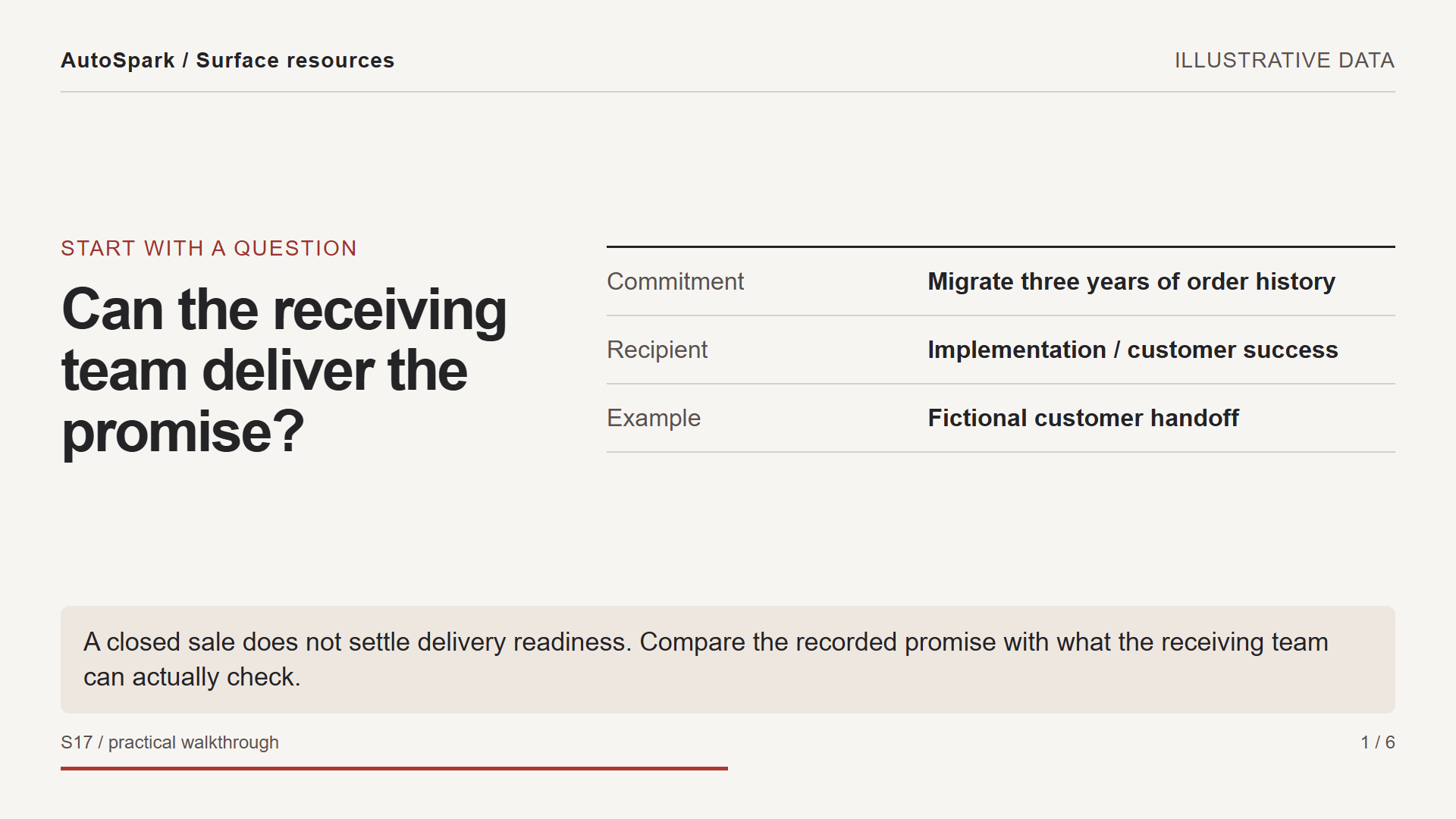
A seller says marking an opportunity won means the delivery team can begin. The receiver says they also need an accepted scope and access to the promised data. Record the two meanings before proposing another required field.
A candidate story is: “As the receiving delivery lead, I need to see unresolved handoff conditions so I can decide whether to accept the work.” One acceptance example leaves a missing data source unresolved with an owner and next action. Another demonstrates the receiver recording acceptance after the condition is resolved.
The story does not require changing the meaning of the sales outcome. That is a separate business decision. Check whether existing configuration already supports the agreed workflow before adding new behaviour.
What to take into design
Keep stable references to the inspected records, with private details in their authorised location. Record any assumptions about objects, permissions or integration events as checks for the platform owner. Do not invent those details from the name of the product.
Use the sales handoff example to inspect commitments and the requirements matrix to follow acceptance evidence. If the team still disagrees about who may accept an exception, that decision remains open even when the story's wording is clear.
Which Salesforce workflow assumptions still need evidence?
Discover lifecycle meaning and exception ownership before selecting a Salesforce implementation.
Your starting question: Which Salesforce workflow assumptions still need evidence?
Start by checking
- Inspect actual records and configuration.
- Agree ownership and exception decisions.
- Define acceptance without assuming a feature.
Evidence to gather
- Workflow examples and configured behaviour.
- Authorised access requirements and receiver conditions.
Not established yet
- A named feature or edition meets the requirement.
- A sales outcome establishes delivery readiness.