Prepare an evidence index for the decision
Before an automation discussion, identify the operational decision, representative examples of ordinary and exception work, the rules being applied and the evidence needed to judge an acceptable result. Record missing material and access conditions. An index that makes those limits clear is more useful than an unexplained collection of files.
This is our proposed preparation method. GOV.UK's user-research guidance for discovery describes learning about current work through research including observation, interviews and existing information. It supports using several inputs; it does not establish that the packet below guarantees a successful automation project.
Name what one record means
Start with the question the proposed automation should improve. If the question is still “Where is work waiting?”, investigate that before assuming which action should be automated.
For each set of records, state the unit, period, selection method and field meanings. Include cases that help examine the question, and explain how they were chosen. There is no universal sample size in this template. A deliberately balanced set of late and on-time invoices can illustrate a comparison but cannot estimate the proportion paid late in the population.
A synthetic invoice packet
| Item | Question supported | Coverage | Known gap | Next check |
|---|---|---|---|---|
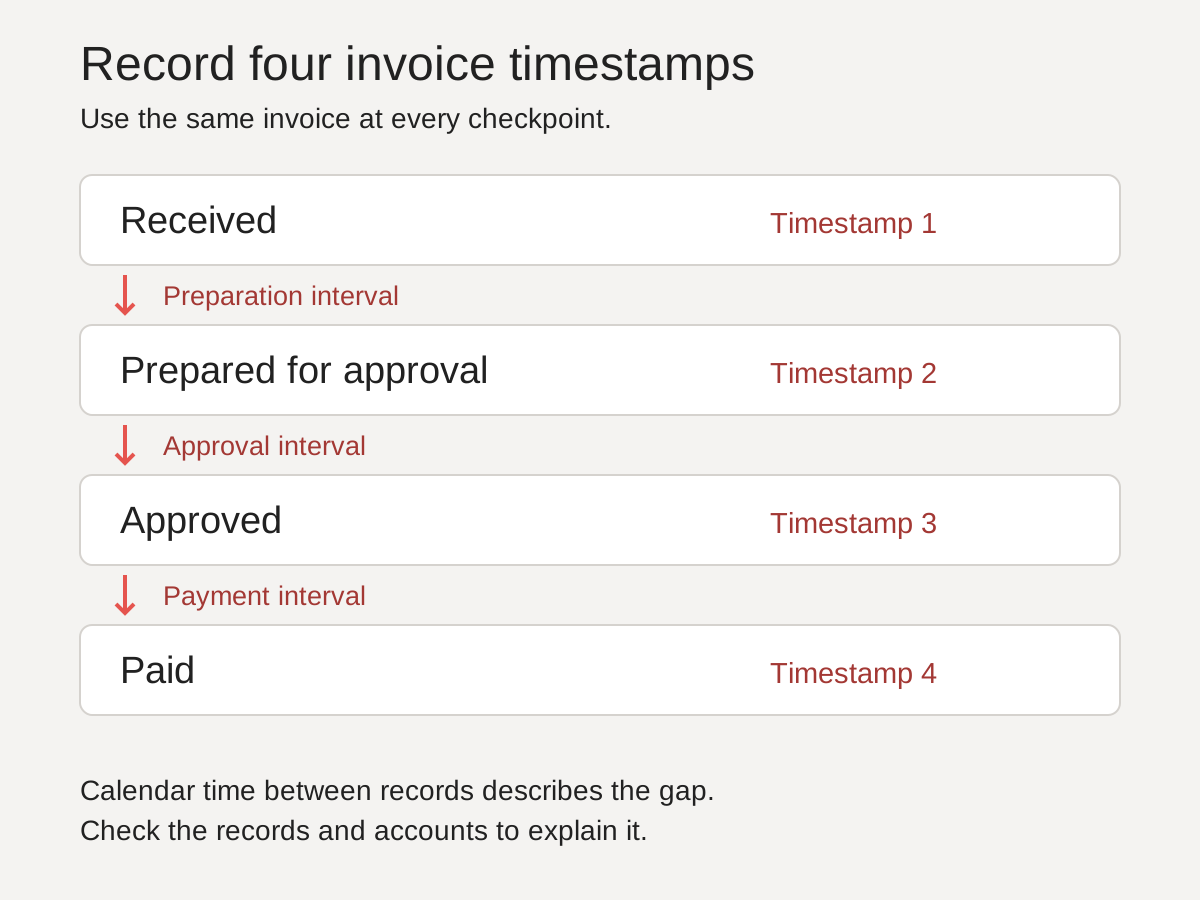
| Invoice worksheet example | Which elapsed stages differ? | Ten invented invoices, five late and five on time | No real supplier or population evidence | Recalculate the supplied intervals |
| Explanatory notes | What explanations could be checked? | Notes attached to the invented records | Accounts are not proof of cause | Identify the record that could confirm each explanation |
| Acceptance requirement | What would a selected change need to demonstrate? | To be agreed after the investigation | No change has been selected | Name the owner and acceptable evidence |
Use the invoice resource for the worked calculation. Use the requirements matrix when the decision has reached a testable requirement. Neither example is a record of a client result.
Copy the index, then collect what is missing
| Item | Question supported | Owner | Period and coverage | Source location | Known gaps | Permitted inspection method |
|---|---|---|---|---|---|---|
| To complete | To complete | To agree | To define | Reference only | Not yet checked | To confirm |
Include the current rule and examples of how it is applied. Identify exceptions, the person with decision authority and what the receiving team needs. The sales handoff template can help distinguish a recorded promise from an unresolved delivery question.
Preserve the source version. If a value is corrected, keep enough context to understand the change. Leave missing records marked missing. A colleague's recollection may suggest where to look, but it should remain an account until checked against appropriate evidence.
Decide whether the discussion is ready
Choose one next step: discuss a bounded change, obtain a named missing piece of evidence, or seek the relevant specialist input. Record the reason and owner. A complete packet can still show that automation is unsuitable or that the question needs narrowing.
Confirm the permitted inspection method with the people responsible for the records. The current resource enquiry accepts context about the investigation. It does not provide a worksheet-upload route or establish permission to share source files. Start with the question, the available evidence and the gap you need help resolving.